

Reference Tokens
When using reference tokens, Duende IdentityServer stores the contents of the token in the persisted grant store and issues a unique identifier for this token back to the client. See what gets cleaned up at logout for details on when these tokens are removed.
The consumer of the token must use the introspection endpoint to validate the token.
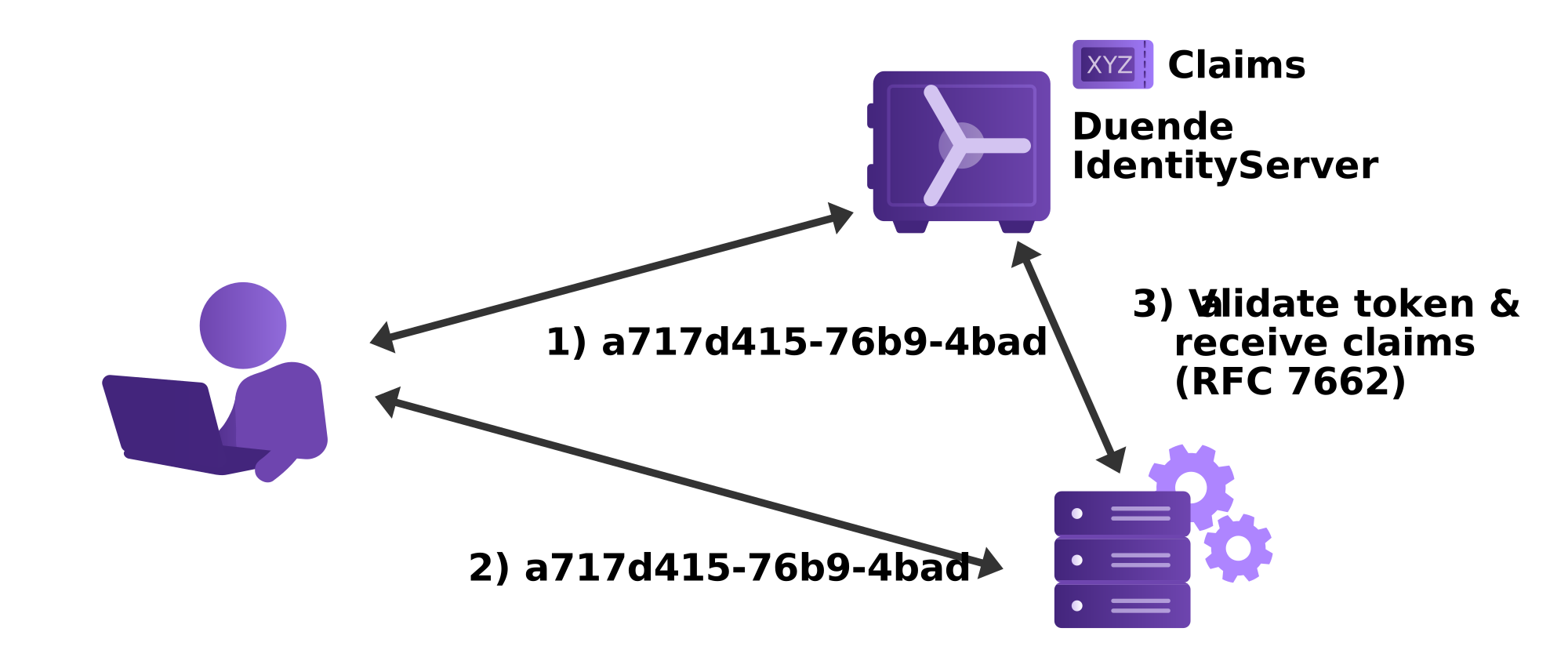
You can set the client’s token type using the following client setting:
client.AccessTokenType = AccessTokenType.Reference;Enabling An API To Consume Reference Tokens
Section titled “Enabling An API To Consume Reference Tokens”The introspection endpoint requires authentication - since the client of an introspection endpoint is typically an API,
you configure the secret on the ApiResource:
var api = new ApiResource("api1") { ApiSecrets = { new Secret("secret".Sha256()) } Scopes = { "read", "write" } }Store Keys And Handles
Section titled “Store Keys And Handles”Reference tokens have a key, which is an internal identifier used in the data store, and a handle, which is an external value that is given to the client and never stored. The handle is 32 bytes of cryptographically strong random data encoded as a hex string with a suffix to indicate the encoding (“-1”). This is the value that clients use as the access token. The handle, plus additional metadata indicating the type of grant, is hashed with the SHA-256 algorithm to produce the key.
When IdentityServer is presented with a handle, it recomputes the key in order to retrieve the persisted grant record for the reference token. The intention of this separation of key and handle is that read access to the store will not reveal sensitive data. An attacker could read the keys in the data store, but those keys were produced using a one-way hash, so the attacker would not be able to use the keys to recover the handles (the actual access tokens).
Trade-Offs: Immediate Revocation vs. Network Dependency
Section titled “Trade-Offs: Immediate Revocation vs. Network Dependency”Because the token’s claims live in the persisted grant store rather than inside the token itself, an API cannot validate a reference token on its own. It must call IdentityServer’s introspection endpoint over the network to exchange the opaque handle for the token’s claims and active status.
This gives you a clear trade-off compared to self-contained JWT access tokens:
- Immediate revocation: Removing the record from the persisted grant store invalidates the token right away. With JWTs, an already-issued token remains valid until it expires.
- Network dependency: The API needs a live connection to IdentityServer whenever it validates a token (or whenever its introspection cache entry expires). If IdentityServer is unreachable, or if the API runs in an offline, air-gapped, or intermittently connected environment, reference tokens cannot be validated. Use JWT access tokens in those scenarios instead.